Showing posts with label historical films. Show all posts

Monday, December 8, 2025

The Physician: Medical Science and God

In the 11th century, Christians were not welcome in Persia, so in the film, The Physician (2013), Rob Cole, a Christian, pretends to be Jewish in order to travel from Western Europe to study at the medical school of Ibn Sina, a famous physician in Isfahan. He eventually reveals his religion as that of “the Father, Son, and Holy Spirit” when he is on trial before the local imam. The Jews there doubtlessly feel used and betrayed. As interesting as interreligious controversy can be, I contend that the nature of Cole’s crime is more significant from the standpoint of religion itself. In short, the film illustrates what bad effects are likely to come from committing a category mistake with respect to religion and another domain. Whether conflating distinct domains or erasing the boundary between them, category mistakes had diminished the credibility of religion as being over-reaching by the time that the film was made. As for the matter of interreligious differences, the sheer pettiness by which the three Abrahamic religions that share the same deity have made mole hills into untraversable mountains is hardly worthy of attention, whereas that which makes religion as a domain of phenomena unique and thus distinct from other, even related domains, is in need of further work. The film could have done more in this regard.


The full essay is at "The Physician." 

Saturday, August 26, 2023

Contending Christianities

The films Agora (2009) and Fatima (2020) contain very different depictions of Christianity. By depictions, I mean ways in which Christianity can be interpreted and lived. This is not to say that all of the interpretations are equally valid, for only those that contain internal contradictions evince hypocrisy. The sheer extent of the distance between the depictions shown in the two films demonstrates not only the huge extent of latitude that religious interpretation can have, but also just how easy it is even for self-identifying Christians, whether of the clergy or the laity, not only to fail to grasp Jesus’ teachings in the Gospels, but also to violate the two commandments even while believing that Jesus Christ is divine (i.e., the Son of God). The human mind, or brain, can have such stunning blind spots (or cognitive dissidence) when it comes to religion that even awareness of this systemic vulnerability and efforts to counter it are typically conveniently ignored or dismissed outright. This is nearly universal, in spite of claims of humility and fallibility more generally, so I contend that the human mind is blind to its own weakness or vulnerability in the religious sphere of thought, sentiment, and action. Augustine’s contention that revelation must pass through a smoky stained window before reaching us is lost on the religious among us who insist that their religious beliefs constitute knowledge. I contend that this fallacy as well as the larger vulnerability to hypocrisy should be a salient part both of Sunday School and adult religious education. For the vulnerability is correctable, but this probably requires ongoing vigilance. That is, the problem is not that the divine goes beyond the limits of human cognition (as well as perception and emotion) as Pseudodionysus pointed out to deaf ears in the 6th century; the human brain is fully capable of spotting and countering its own lapses in the religious domain. In other words, the problem here is not that of the human mind being able to understand the contents of revelation because must travel through a darkened window before reaching us; rather, the problem lies in grasping what Jesus preaches in the Gospels and putting the spiritual principles into practice, rather than doing the opposite and being completely oblivious to the contradiction, which is otherwise known as cognitive dissidence. The two films provide us with the means both to grasp this problem and realize how much it differs from a healthy faith that has the innocence of a child’s wonder.

The full essay is at "Agora vs. Fatima."


Thursday, November 29, 2018

Risen

In Risen (2016), A Roman Tribune, Clavius, is tasked with overseeing Jesus’s crucifixion; more importantly, Pilote tasks his Tribune with making sure that no one steals the body out of the tomb so no one could claim that Jesus is arisen. This would put the Jesus movement within Judaism as much more of a threat to Pilote as well as the Jewish leaders. More than Christians can glean interesting lessons from the film. That is to say, it is by no means a remake of The Greatest Story Ever Told and Son of God.
The full essay is at "Risen."


Wednesday, May 30, 2018

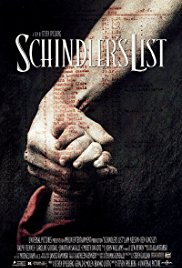
Schindler's List: A Christian Notion of Power Based on Compassion

In German-occupied Poland during World War I, Oskar Schindler spent millions to save 600 Jews from the death camps. In the 1993 film, Schindler’s List, the gradual transformation of the luxuriant capitalist is evident as the film unfolds. At the end,  he comes to an emotional realization as to the worth of money as compared with human lives. He realizes that had he not spent so lavishly, he could have saved even more lives. He realizes, in effect, his selfishness that had blinded him even to the obvious severe suffering of the Jews around him. The story is thus not simply that of greed giving way to compassion. 

The full essay is at "Schindler's List."


Wednesday, March 28, 2018

Christian Films as Distinctly Theological: A Theological Project

Should films with a distinctively religious theme and narrative water down the theological dimension so to be more acceptable in modern, secular society (i.e., a broader range of movie-goers), and thus profitable? The success of films like The Last Temptation of Christ, The Nativity Story, The Passion of the Christ, and Son of God suggest that theology should be embraced rather than tempered if box-office numbers are at all important. The genre should thus be distinguished from historical drama. Screenwriters and directors engaging in the religious genre would be wise, therefore, to distinguish the theological from the historical even in handling religions in which the historical is salient in the theological.

The full essay is at "Christian Films as Theological."