Showing posts with label power aggrandizement. Show all posts

Monday, March 30, 2020

Pope Benedict and Pope Francis: Power and Papacy

Power is seductive, even within religious organizations. It is like a drug in that denial can accompany an instinctual urge for immediate power even at the expense of the person’s own credibility. Put another way, self-discipline can easily succumb to the urge for power, even if the person has previously foreswore acting on that urge. Warped discernment between minor and major issues can also occur from the gravity of the instinctual urge. For example, a cleric may choose to break his or her decision to disavow acting on the urge in part because he or she incorrectly views the issue at hand to be a major one, when in fact it is not, at least as far as the religion is concerned. As in the case of a drug, perception, judgment and cognition may be impaired, or warped, by the urge itself. The Roman Catholic ex-Pope Joe Ratzinger (Pope Benedict XVI) is a case in point.


When Pope Benedict resigned in 2013, “some experts believed he should go back to being simply ‘Cardinal Joseph Ratzinger,” his previous title and given name, to emphasize that he no longer held any papal authority and to reduce the chance he might be seen as a rival point of reference to his successor.”[1] For his part, Ratzinger vowed to remain “hidden from the world.”[2] This decision was particularly important because just the fact that he continued to wear papal attire could lead people to view him as having such authority. In fact, bearing the likeness of a pope could have tempted him to leverage his appearance in order to challenge the current pope, presumably on a controversy central to the Roman Catholic Church.

Unfortunately, the former pope was not able to keep himself hidden from the world. In From the Depths of Our Hearts, published in 2020, he “argues in favor of the centuries-old tradition of celibacy within the church.”[3] In the introduction, he wrote, “We can say: ‘Silere non possum! I cannot remain silent!”[4] He could not remain silent, hidden from the world, on the matter of a tradition. His change of heart on remaining silent would have been more justifiable had a major theological doctrine, such as the divinity of Christ, been the controversy, yet he inveighed on a tradition, which a pope could change.

Indeed, the former pope broke his silence on a matter then before the current pope, challenging Francis’s statement that sometimes other factors had to be considered.  In this case, the exception had to do with whether to relax the celibacy rule pertaining only to the Amazon region in South America and only to whether elderly men could be ordained to relieve the shortage of priests. No priest would be getting married. So the controversy was actually quite minor because it was not only on a tradition, but even more damning, on a regional exception that still would not allow priests to get married (the elderly men in the Amazon being already married).

In short, the former pope chose to challenge the sitting pope on an exception to a tradition. Yet Ratzinger perceived the matter to be very important indeed. He wrote that he believed that celibacy carries “great significance” and is “truly essential.”[5] In fact, “(t)he call to follow Jesus is not possible without this sign of freedom and of renunciation of all commitments,” he wrote.[6] With its requirements, celibacy must penetrate “all of the attitudes of existence.”[7] Leaving the matter of whether it is or is not possible to follow a Christian religious calling without being celibate aside, I submit that the former pope overreacted to Pope Francis’s assertion that sometimes other factors should be considered as to whether specific exceptions should be made. The former pope chose to break his silence in order to use his papal influence to challenge the sitting pope on a minor matter.

Even if celibacy is as important to the Church as Ratzinger asserted, challenging the current pope when the latter agrees with the former pope on the principle represents a misjudgment in which, I contend, the urge for power was salient. Ratzinger felt an irresistible urge to speak up, violating his own terms of being hidden from the world, on an exception to a general rule. By implication, he compromised not only his own credibility, but also the viability of the office of an emeritus pope. I submit that whatever influence he achieved on whether an exception should be made to the celibacy rule was not worth the costs to not only him, but also his Church as unified rather than divided.


1. Amy Woodyatt, Vasco Cotovio, and Hada Messia, “Ex-Pope Benedict Undercuts Francis on Priests and Celibacy,” CNN.com, January 13, 2020. (accessed same day)
2. Ibid.
3. Ibid.
4. Ibid.
5. Ibid.
6. Ibid.
7. Ibid.

Saturday, March 16, 2019

The President: A Tyrant Discovers the Kingdom of God

Religion and political power can be dangerous if combined and aimed at people deemed to be apostate or heretical. In calling for the Crusades, our Roman Catholic popes put their political power behind the theocratic and political goal of taking back Jerusalem and Constantinople/Istanbul “for Christ.” Those popes and the kings and soldiers who went to war with the Muslims there wittingly or unwittingly violated Jesus’s preachment to love rather than fight enemies. Christianity and political power have not mixed well, historically. The U.S. Constitution forbids the federal government and, presumably, the states, to establish or sponsor a religion or even favor one. Theocracies, such as those in the Calvinist colonies in New England (except for Rhode Island, which allowed freedom of religion), would be excluded as a political form for the Union as well as its member-states. Rather than meaning “sub-unit” or “province” as in Normandy in the E.U. state of France, the American Continental Congress has applied “state” in the generic sense of a polity with a yet-to-be-determined political system. Hence while the Articles of Confederation were in force, before the U.S. Constitution, the states could legally form theocracies. The film, The President (2014), is fictional, but this doesn’t stop its portrayal of a toppled president in hiding from looking realistic, given the cases of Muammar Gaddafi in Libya and Saddam Hussein in Iraq. The character arc of the president while he is in hiding, or “on the run,” captures a generally unknown way in which Jesus’ preaching on how to enter the unknown Kingdom of God can apply to political power in a good way. This is not to advocate theocracy, however. Rather, individuals who wield power, whether in government or business, can come to see the very nature of power differently and gain new insight into the Kingdom of God preached by Jesus.

The full essay is at "The President."


Tuesday, June 19, 2018

On the Methodist Complaint against U.S. Attorney General Jeff Sessions on an Immigration Policy

Assessing whether a Christian denomination’s formal discipline is being used for religious or politically-ideological purposes is fraught with difficulty. Certain governmental policies, such as genocide, clearly violate Christian teaching, such that government officials charged with implementing such policies could legitimately be sanctioned on religious grounds without it being thought that a political or partisan difference is the actual basis of protest. As the harm to others in a given policy lessens, the specter of ideological opposition as the actual motivator increases as a possibility. In 2018, 640 United Methodists filed a complaint to their church charging U.S. Attorney General Jeff Sessions with having violated the Church’s Book of Discipline, its code of laws and social principles, on account of the alleged “child abuse, immorality, racial discrimination, and ‘dissemination of doctrines contrary’ to those of the United Methodist Church.”[1] Sessions had been tasked with implementing the U.S. immigration policy of separating children from their parents at the border. At the time of the complaint, over 2,000 children of illegal aliens were being held by the U.S. Government as their parents were being prosecuted.
From a political standpoint, the separation may have served as a deterrent to potential illegal immigrants as well as a practical means by which the adults could be prosecuted. The moral harm in the separations is clear. For Christians, the morality factor must be put up against Jesus’s teachings and example. It is highly unlikely he would have supported separating children from their parents. In fact, he pointed to the innocence of children as being like the Kingdom of God.
For his part, Jeff Sessions pointed to Paul’s dictum in Romans 13 to obey civil authorities. Jesus himself said to give what is Caesar’s to Caesar. Sessions’ defense is flawed, however, because obeying the authorities would apply to the illegal immigrants who are Christian, rather than to the authorities themselves. What would Jesus say to a Christian authority concerning harm to others through a government action or policy?
The answer may depend on the grievousness or extent of the harm to others. Surely Jesus would disown any of his followers involved in perpetuating the NAZI holocaust in Germany. Separating children from their respective parents involves less harm than would killing the parents or their children, but the harm is still very significant to both parties. Sessions could point out that the parents risked this harm by crossing the border illegally. Even so, the question for the Christian is where Jesus would stand on a civil official implementing a policy of such harm. I contend that Jesus would have rebuffed such an official. How Jesus rebuffed the rich man, who would not part with his wealth to follow Jesus, can be taken as a model or indication. You can keep your power or money, but you cannot follow me if you do.
In terms of money, Jesus’s stance toward the rich man is a very strict view, which would be modified in Christianity from the Commercial Revolution on.[2]  In particular, the good use of even just part of a fortune would come to justify being wealthy. Similarly, could the good use of political power be said to legitimate holding civil power by a Christian? The difficulty especially concerning governmental power is what counts as good, for partisans have different answers, even different ideals or stressed values. The 640 Methodists may have objected to the good that Sessions saw as coming from the policy. In his view, that good is the order that comes from a nation of laws; illegal immigration hampers or detracts from such good because of the lawlessness itself as well as the associated culture of disrespect for laws. Would illegal immigrants suddenly respect and obey traffic laws in Arizona after having presumed that the immigration laws do not apply?
In short, as soon as we drift away from “What would Jesus do?” to consider the good use of political power, we open up the problem of different political ideologies, each of which can be said to have some version of the good in mind even if harm to others is in the means. What would Jesus say to Jeff Sessions? This is what his pastor should focus on, rather than wading into political waters that can easily be twisted one way or the other, and can belie legitimate religious points. From the latter perspective, the harm in the action of the policy itself is at issue. Would Jesus accept one of his followers assuming a government post that involves separating children from their parents?


[2] Skip Worden, God’s Gold.  Available at Amazon

Wednesday, May 30, 2018

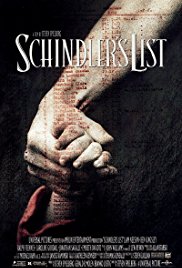
Schindler's List: A Christian Notion of Power Based on Compassion

In German-occupied Poland during World War I, Oskar Schindler spent millions to save 600 Jews from the death camps. In the 1993 film, Schindler’s List, the gradual transformation of the luxuriant capitalist is evident as the film unfolds. At the end,  he comes to an emotional realization as to the worth of money as compared with human lives. He realizes that had he not spent so lavishly, he could have saved even more lives. He realizes, in effect, his selfishness that had blinded him even to the obvious severe suffering of the Jews around him. The story is thus not simply that of greed giving way to compassion. 

The full essay is at "Schindler's List."